
Sugar sanding
Discuss a sanding drum and conveyor arrangement for a sugar-coated finish.

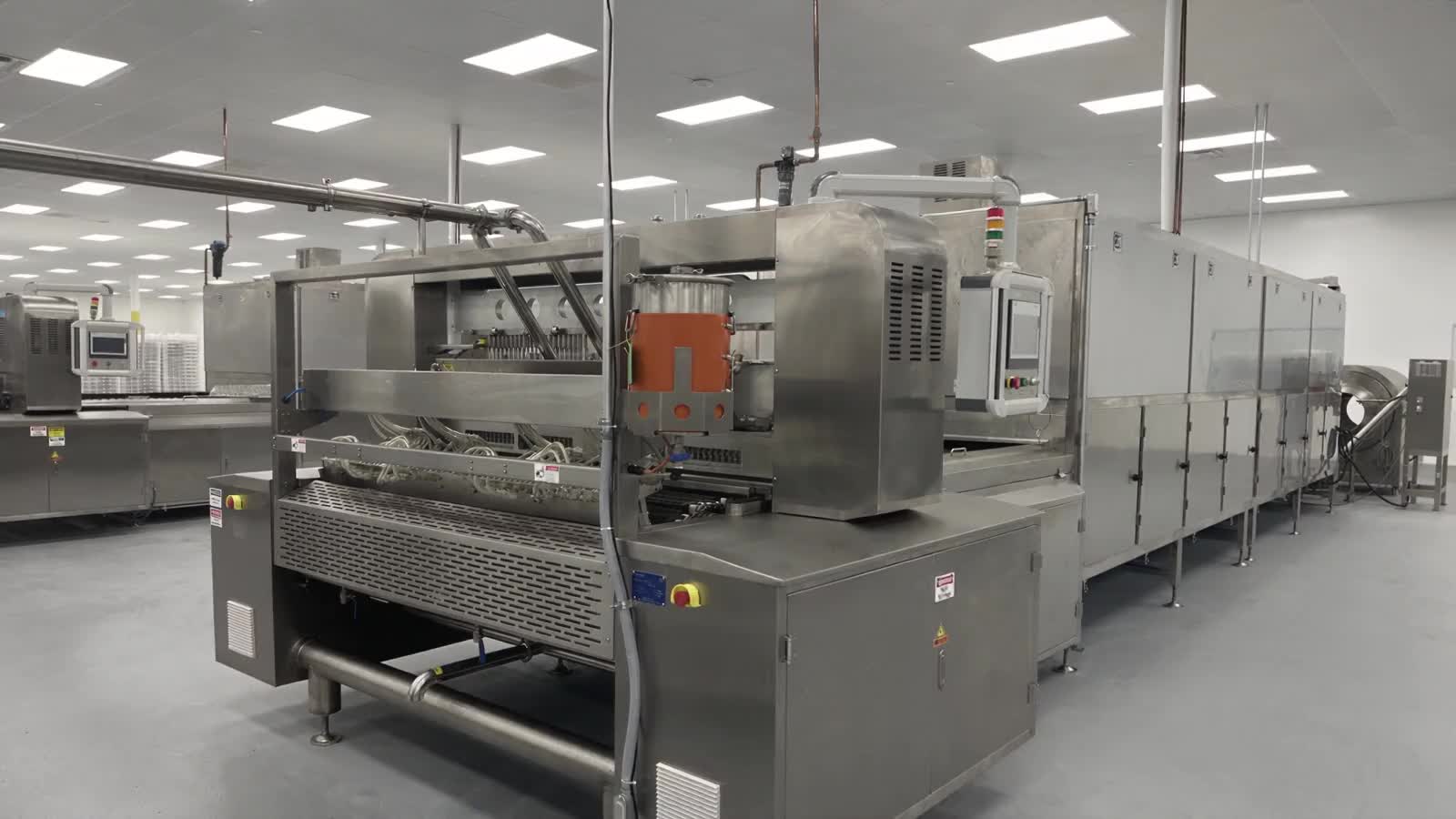
From ingredients to finished gummies. Get to know the equipment, step by step, then choose the configuration for your production.
Choose a model to review its capacity and configuration options. The walkthrough explains the shared production sequence.
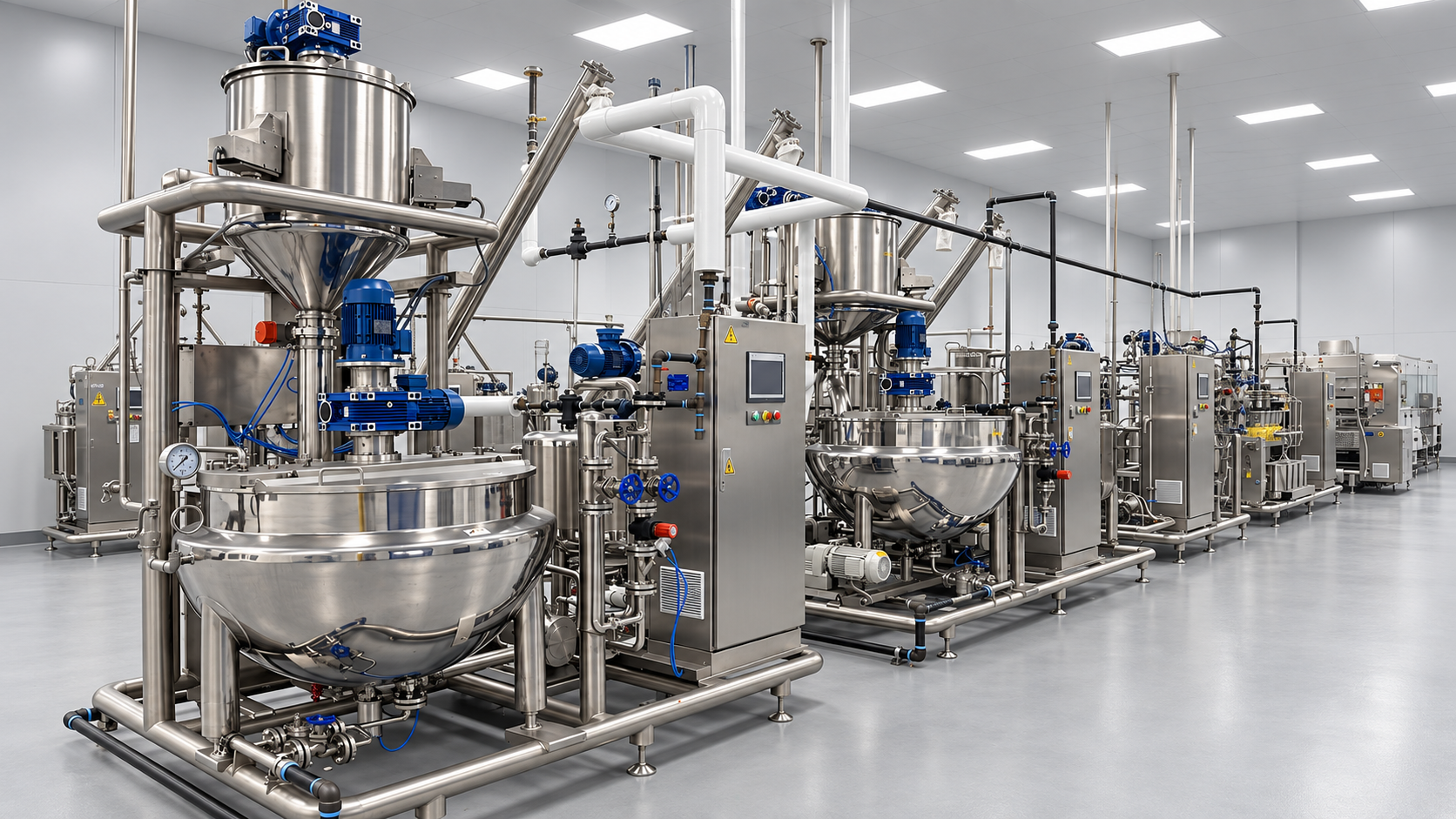
Product visualization · equipment scope confirmed by quote
For larger output goals and integrated ingredient handling.
Follow the shared process below. The films remain labeled by the machine shown.
Review EVO600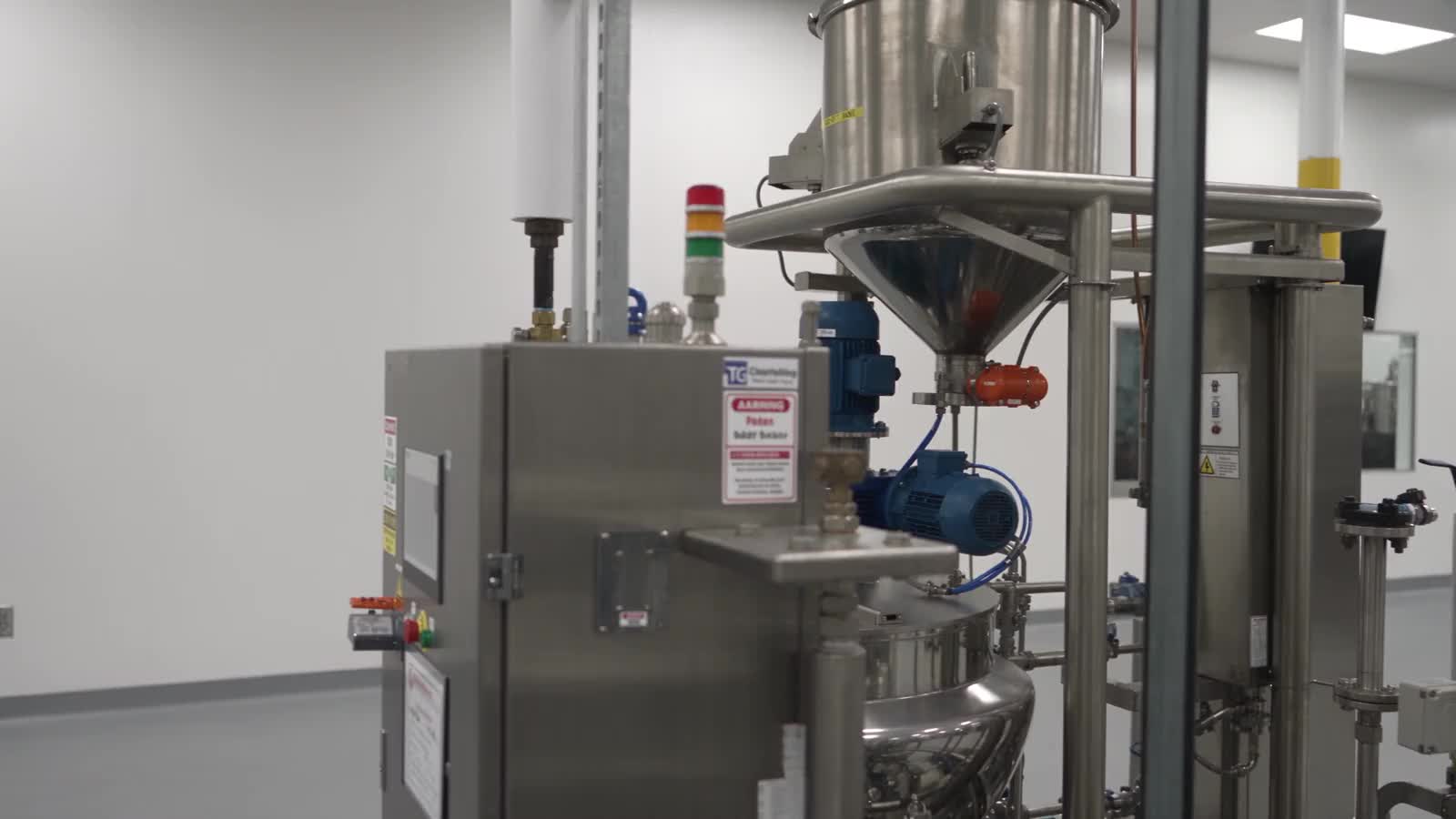
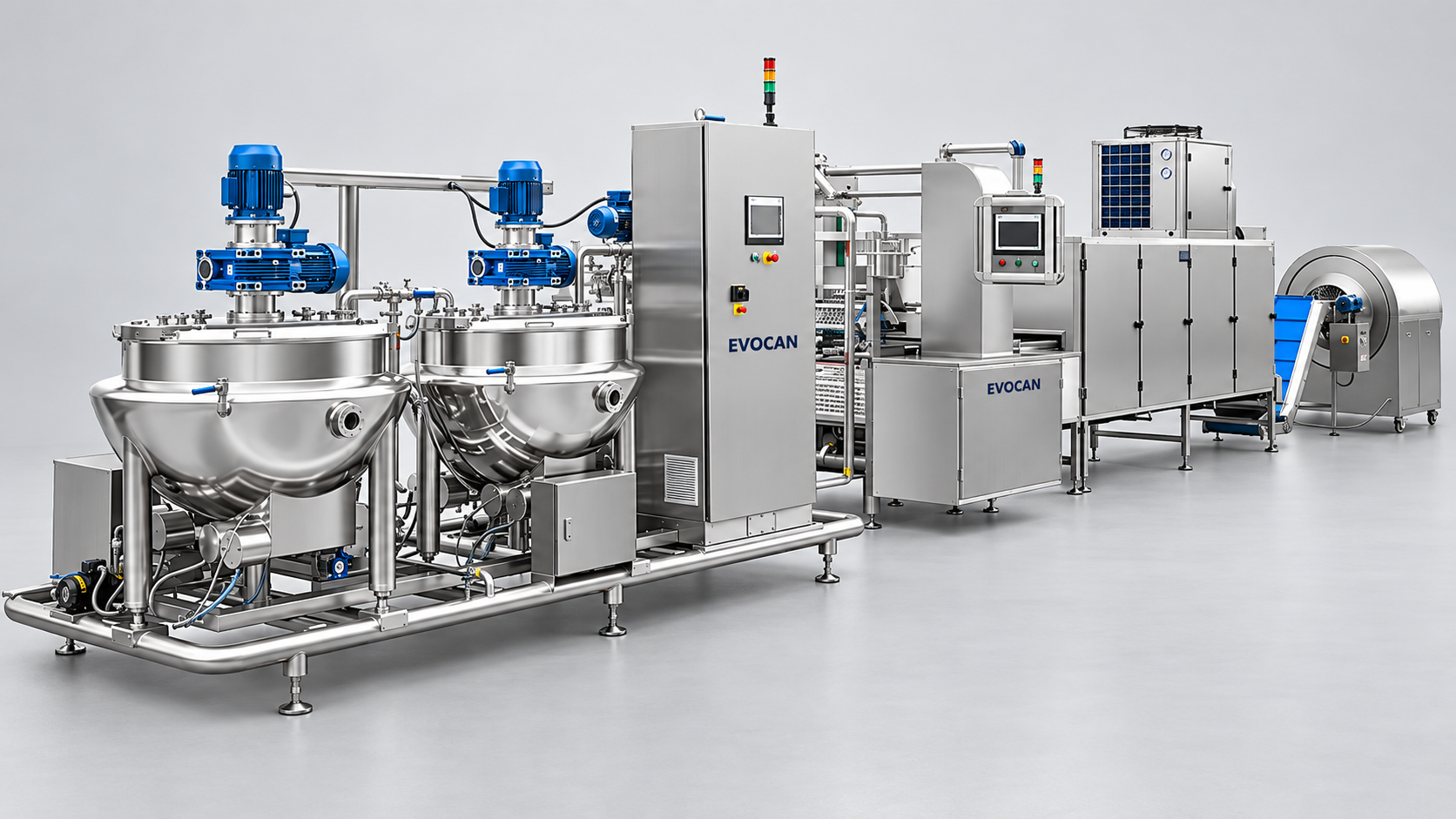
Prepare the gel and syrup before they enter the production line. Mixing and holding vessels bring the recipe together ahead of cooking.
Gel preparation, syrup weighing, mixing and holding scope depend on your recipe and selected line.
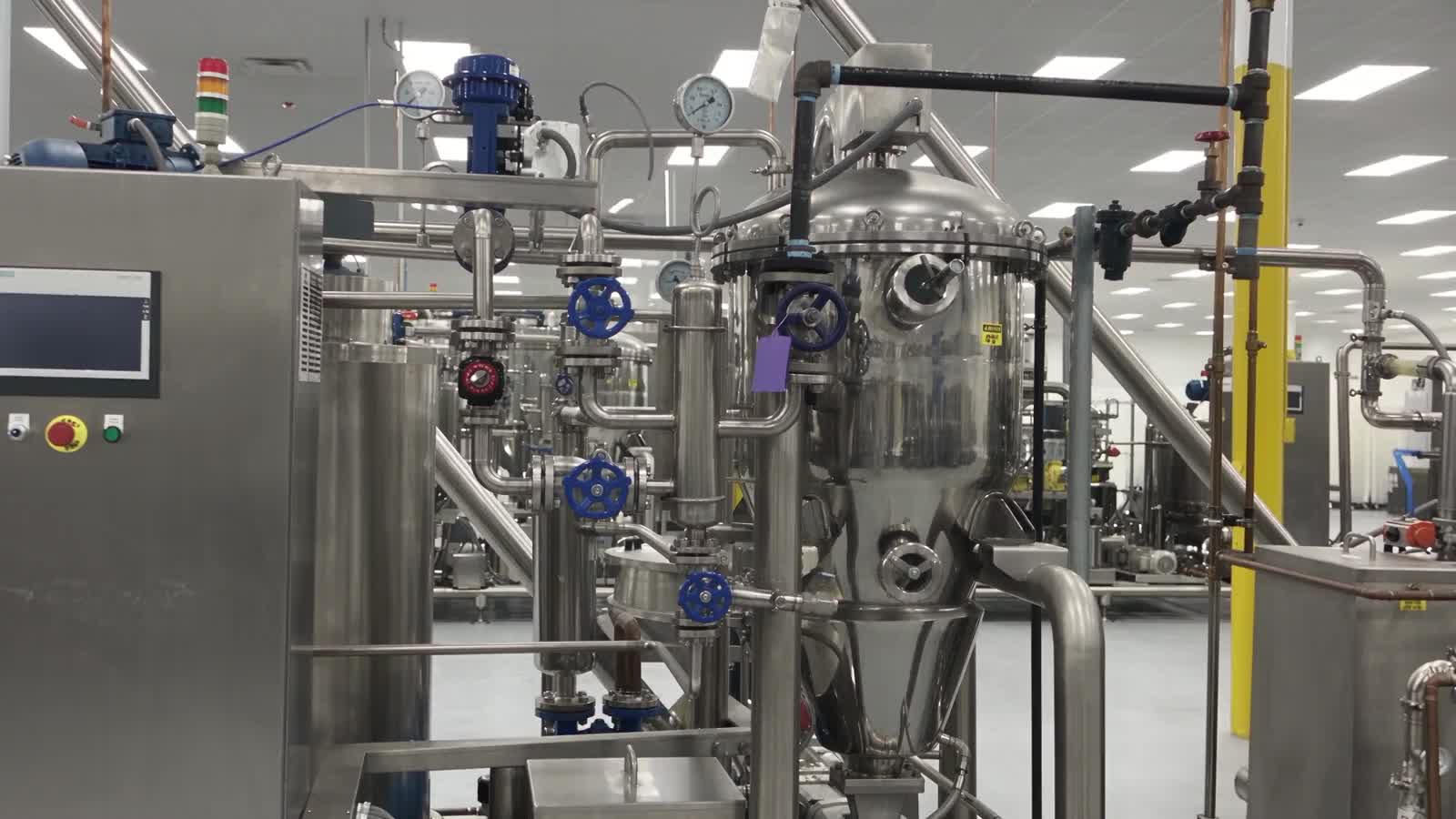
The cooking system heats and concentrates the syrup before it moves toward the depositing system. Cooking and holding are planned together to supply the line.
Discuss batch or continuous cooking and the available heating utilities. Your recipe determines the process requirements.
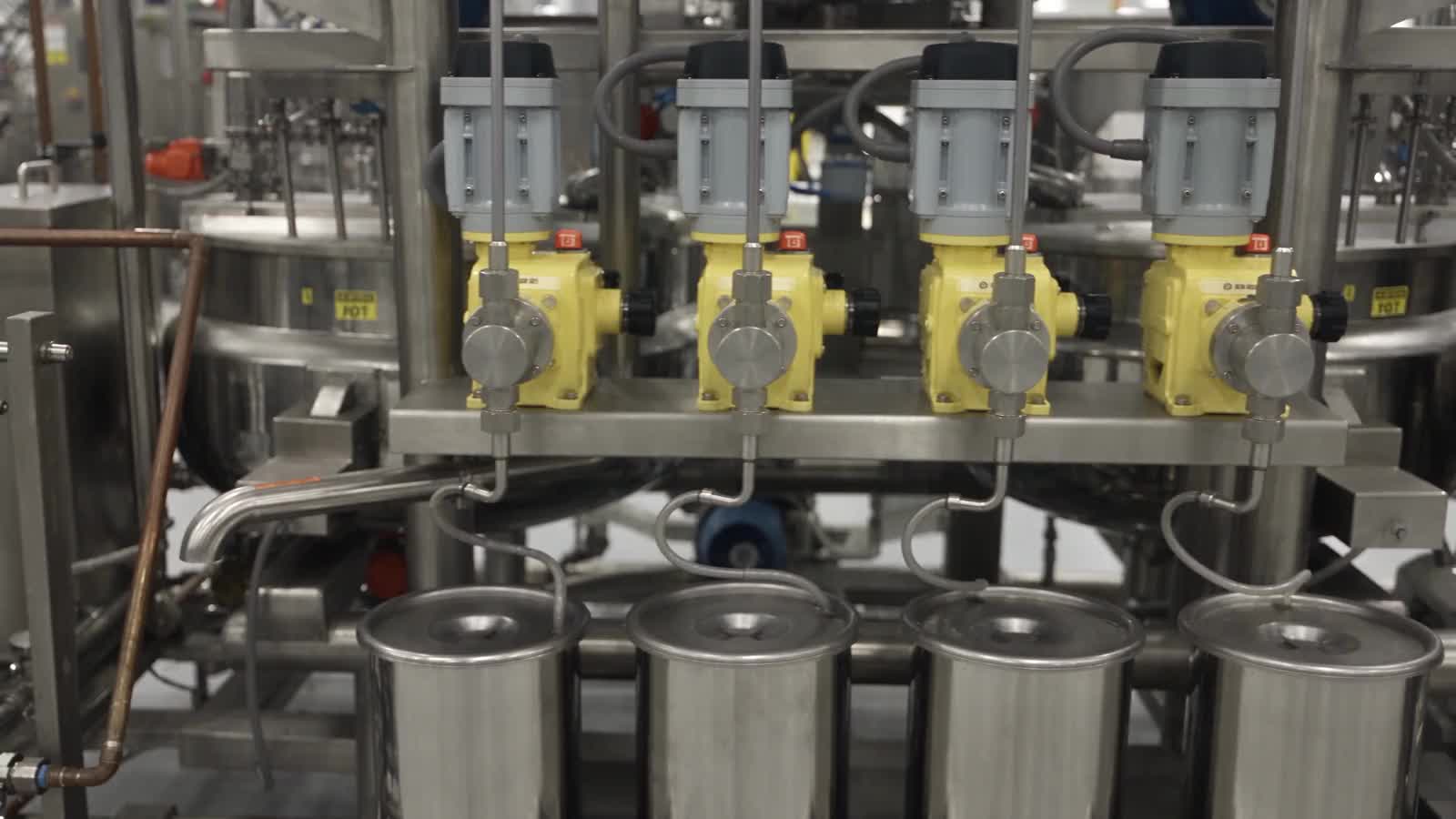
Color, flavor and acid additions are coordinated ahead of depositing. The dosing and mixing arrangement is selected around the formulation and product you want to make.
Confirm whether a separate CFA dosing system is included. Dual-color and center-filled products require the corresponding equipment configuration.
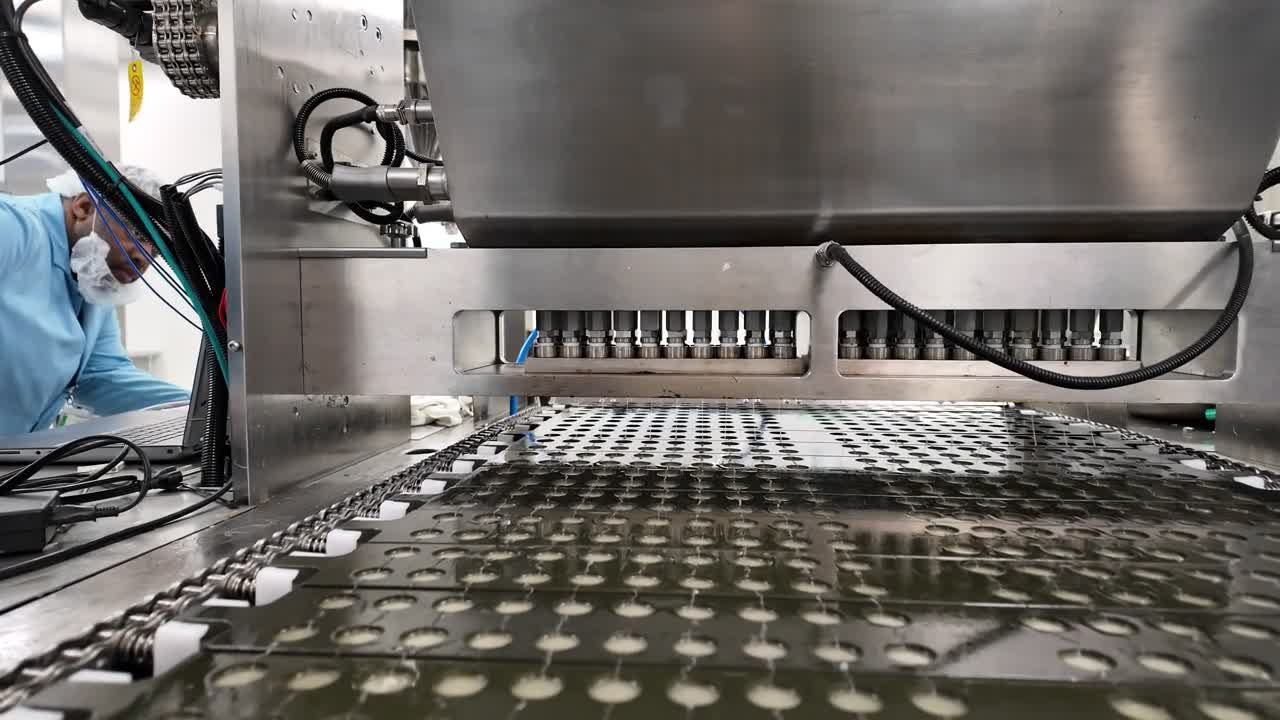
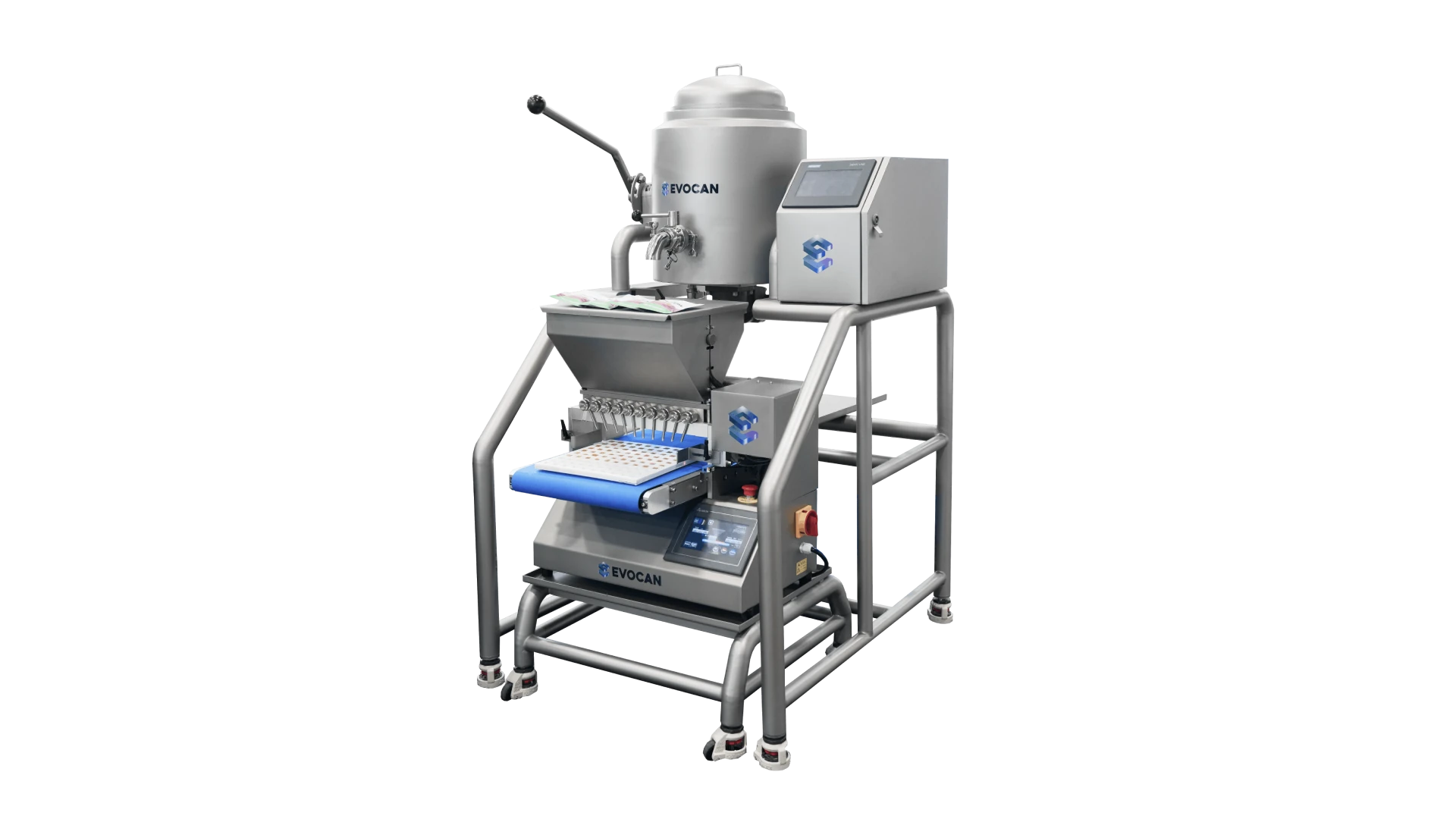
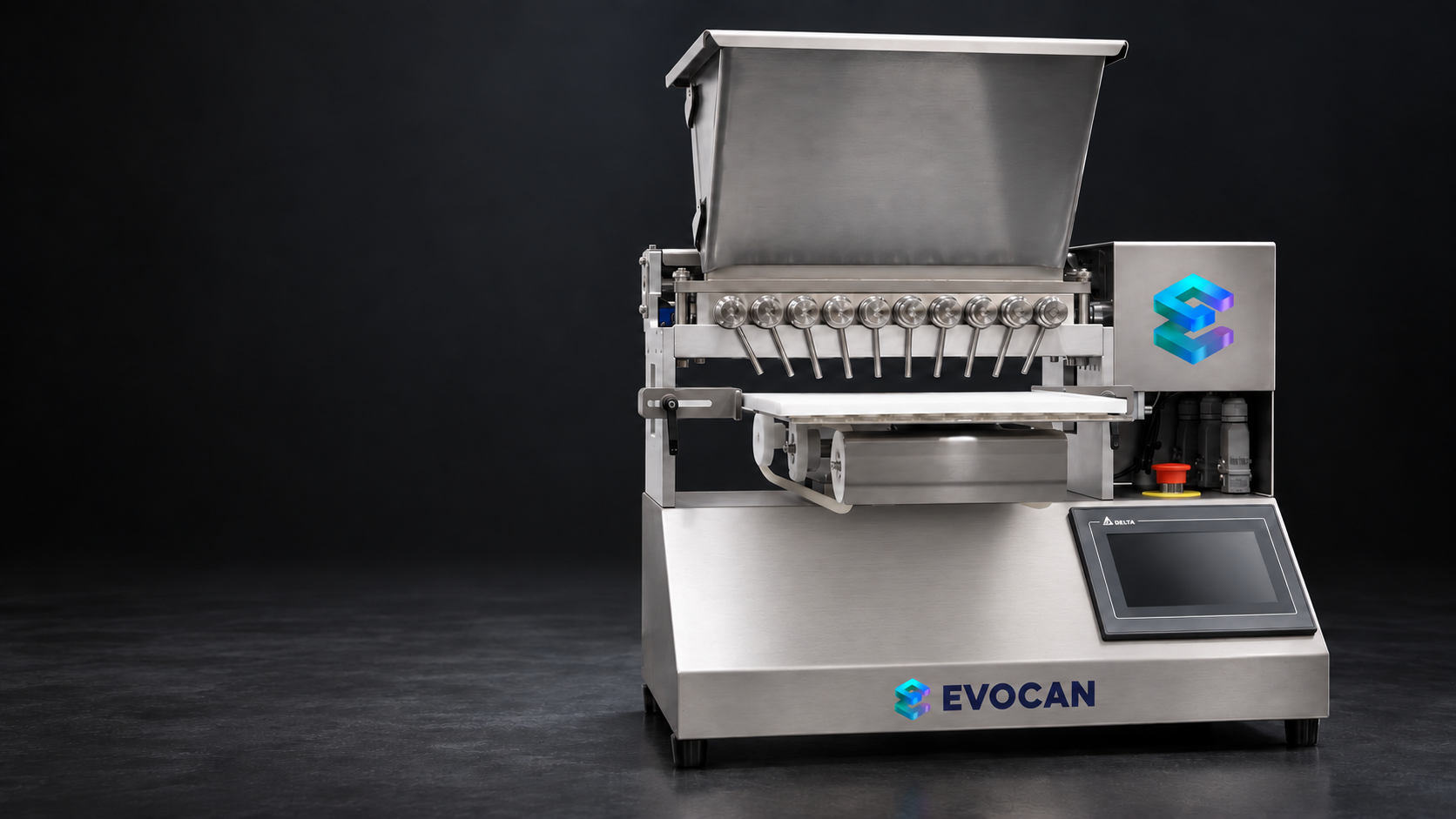
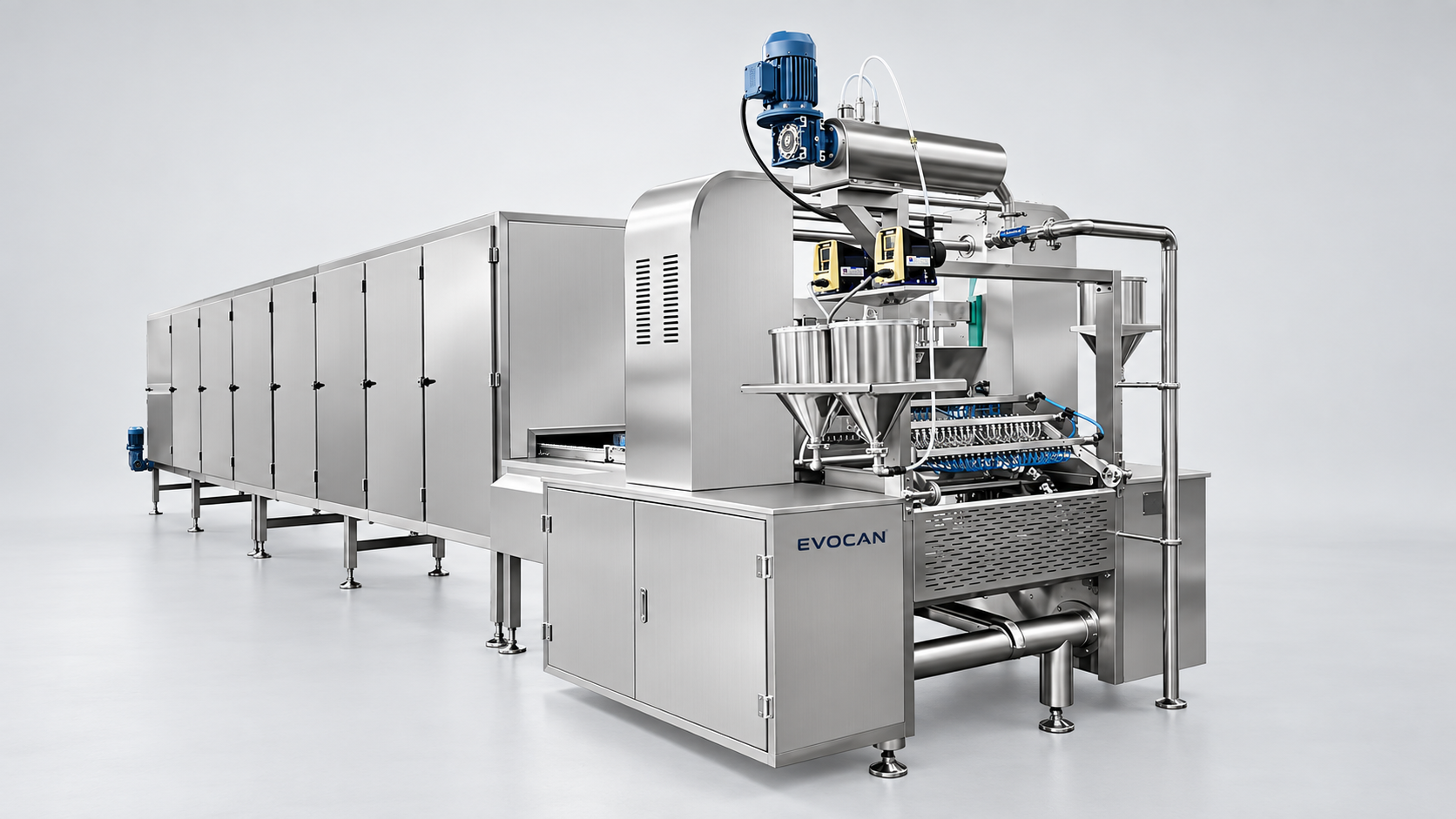
Watch the depositing head fill the mold rows, then advance to the next position. The mold shape, piece weight and depositing configuration work together to form the gummy.
Specify single-color, dual-color or center-fill requirements, along with cavity shape and target weight. Availability depends on the selected build.
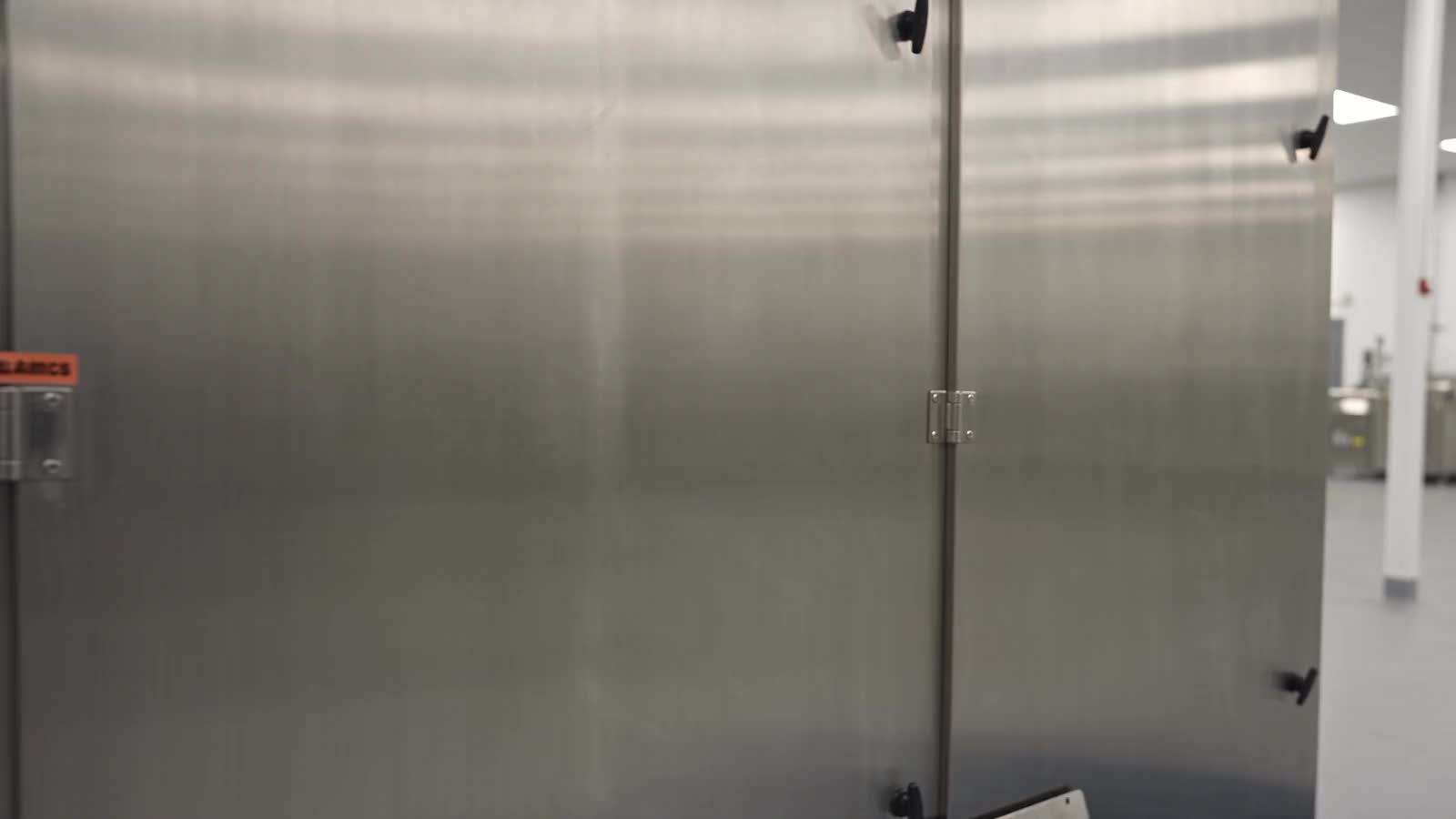
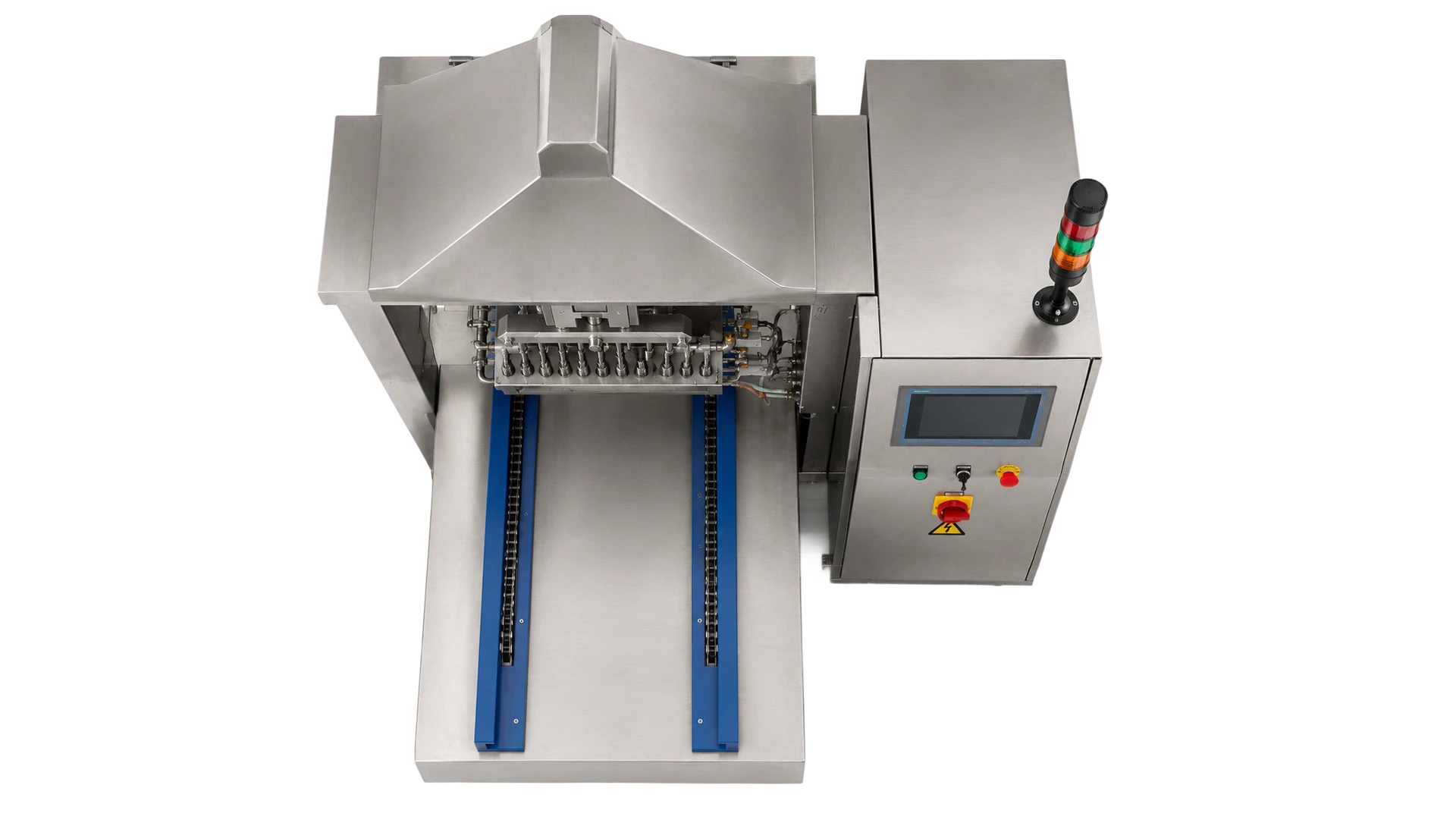
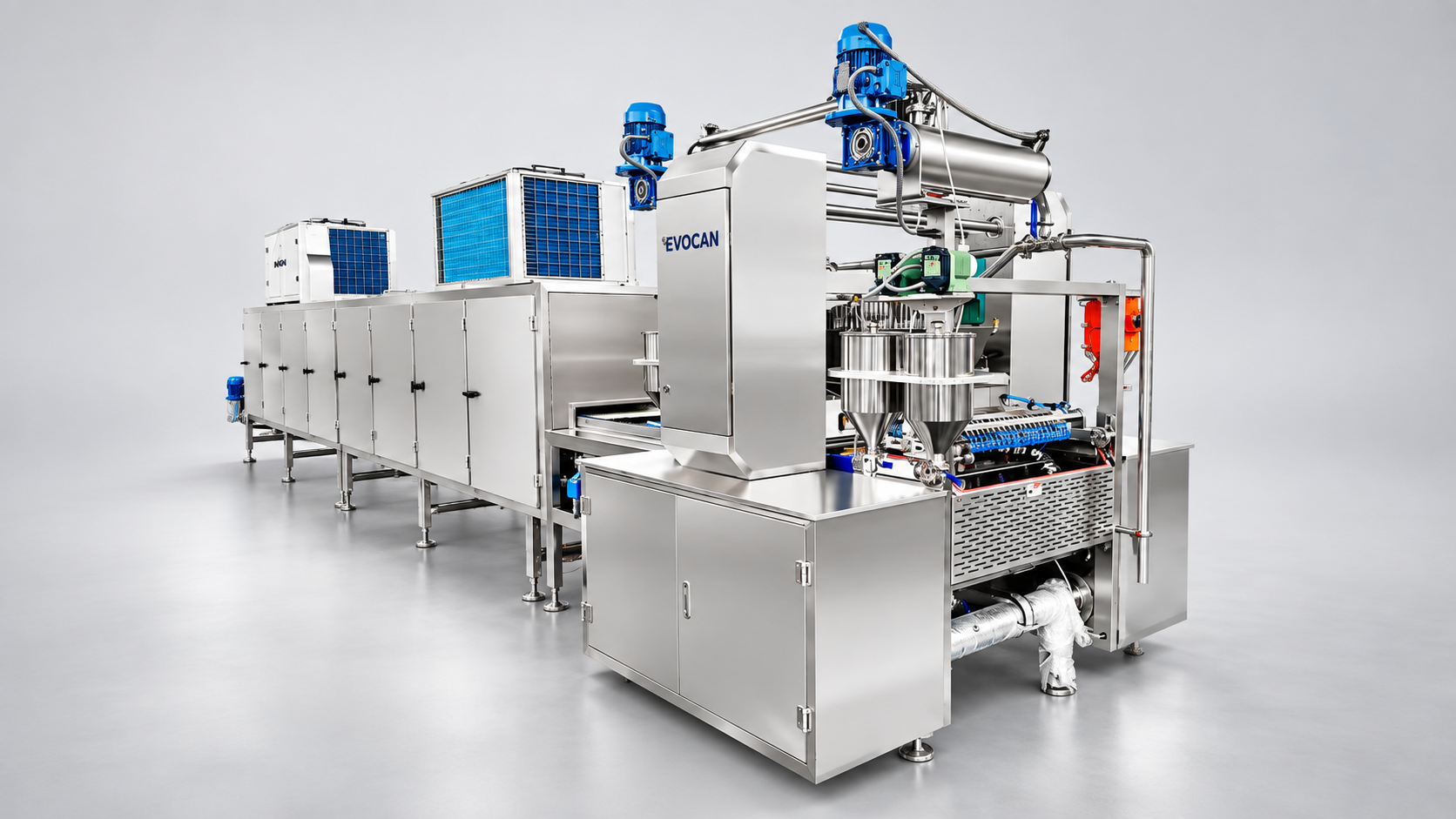
Filled molds travel through the cooling tunnel before release. Cooling is part of the mold circuit between depositing and demolding.
Cooling duty, residence time and mold travel are matched to the recipe and output target. This exterior view shows the enclosure, not the internal process.
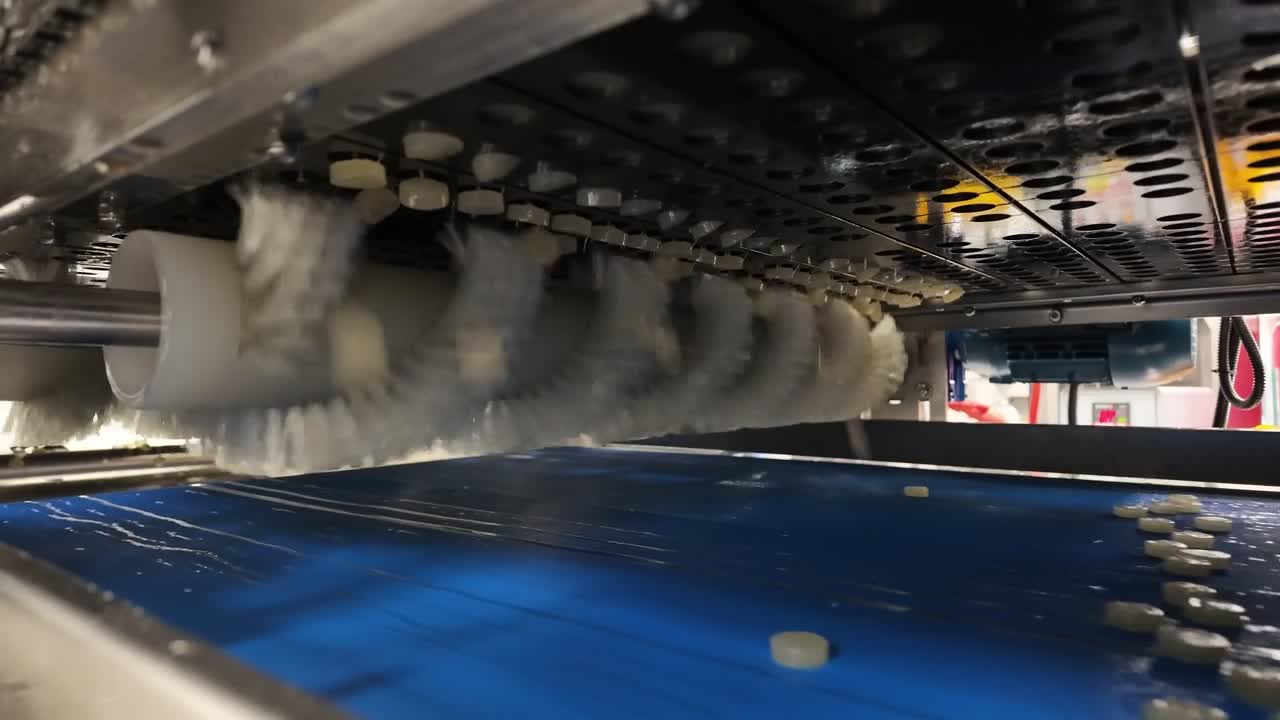
Once the gummies have set, the demolding stage releases them from their cavities onto the collection conveyor. The empty molds continue through the mold circuit.
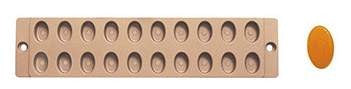
Mold material, cavity geometry and release method must work together. Confirm the mold sets and demolding arrangement in your equipment scope.
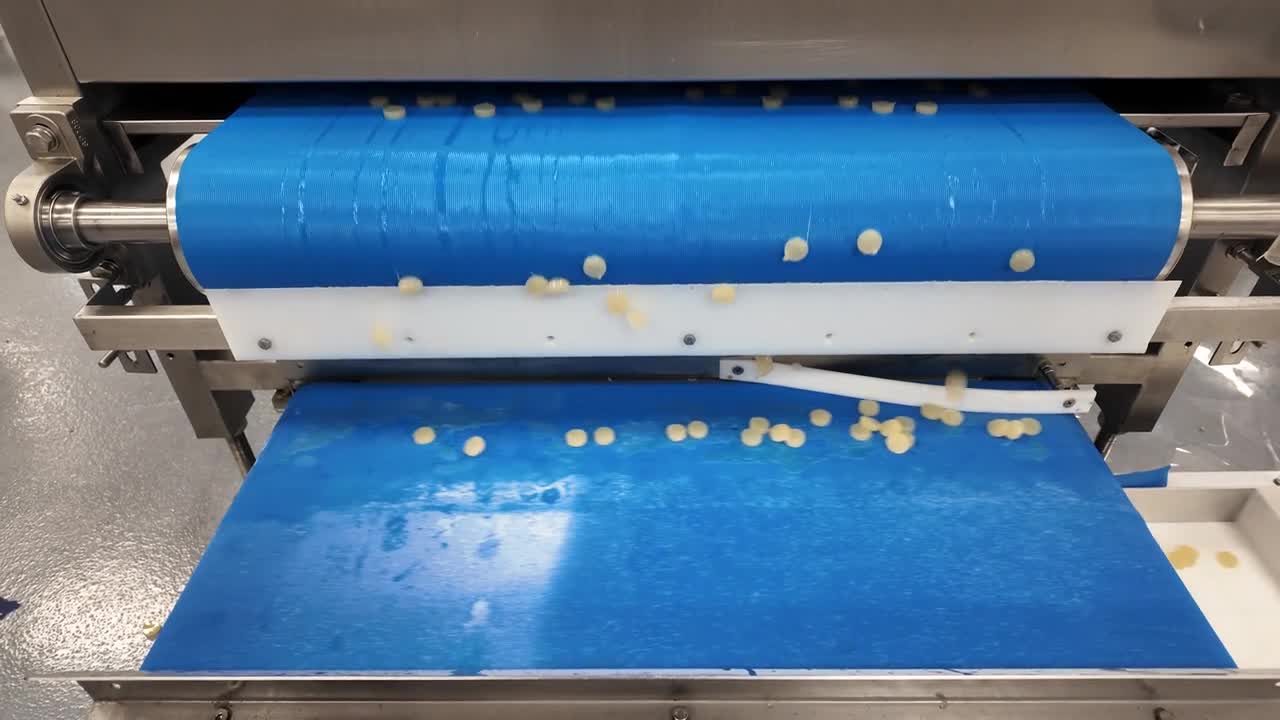
The discharge conveyor carries demolded gummies away from the machine and toward the next handling or finishing step.
Plan conveyor connections, working clearances and the receiving equipment around your facility layout.
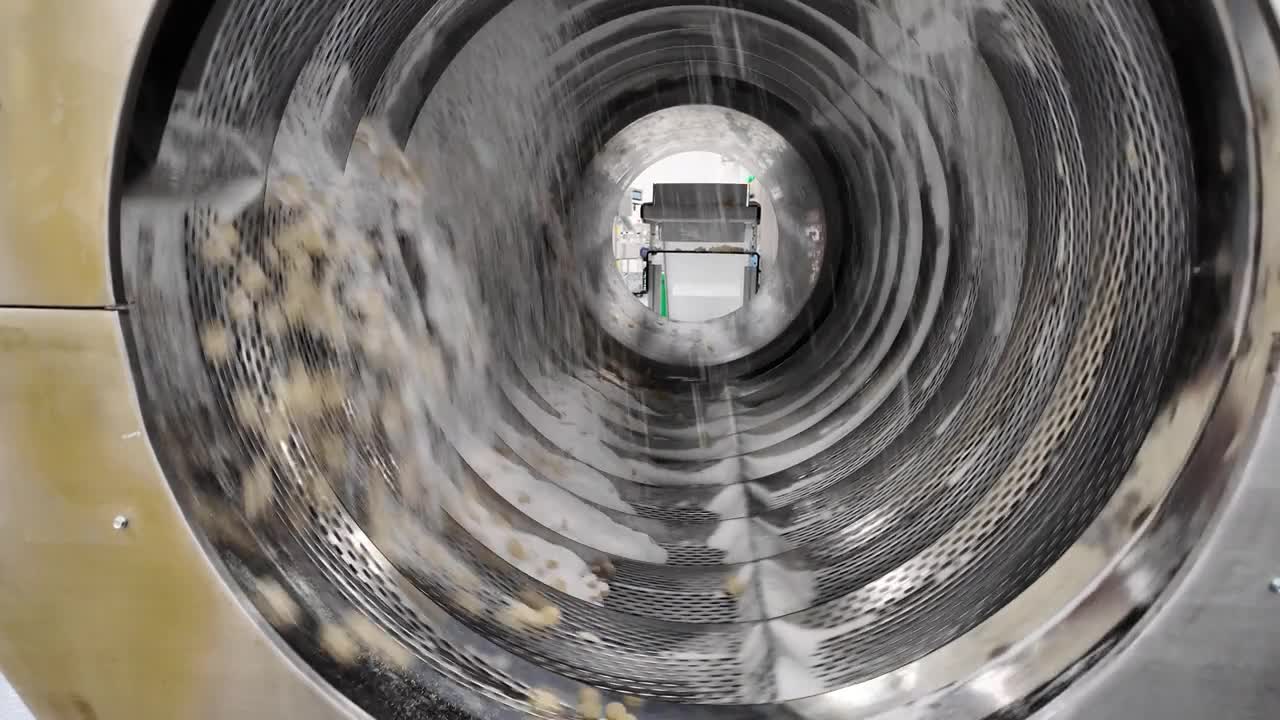
Here, the conveyor feeds gummies into a sugar-sanding drum. The tumbling action applies the finish before the product moves on to downstream handling.
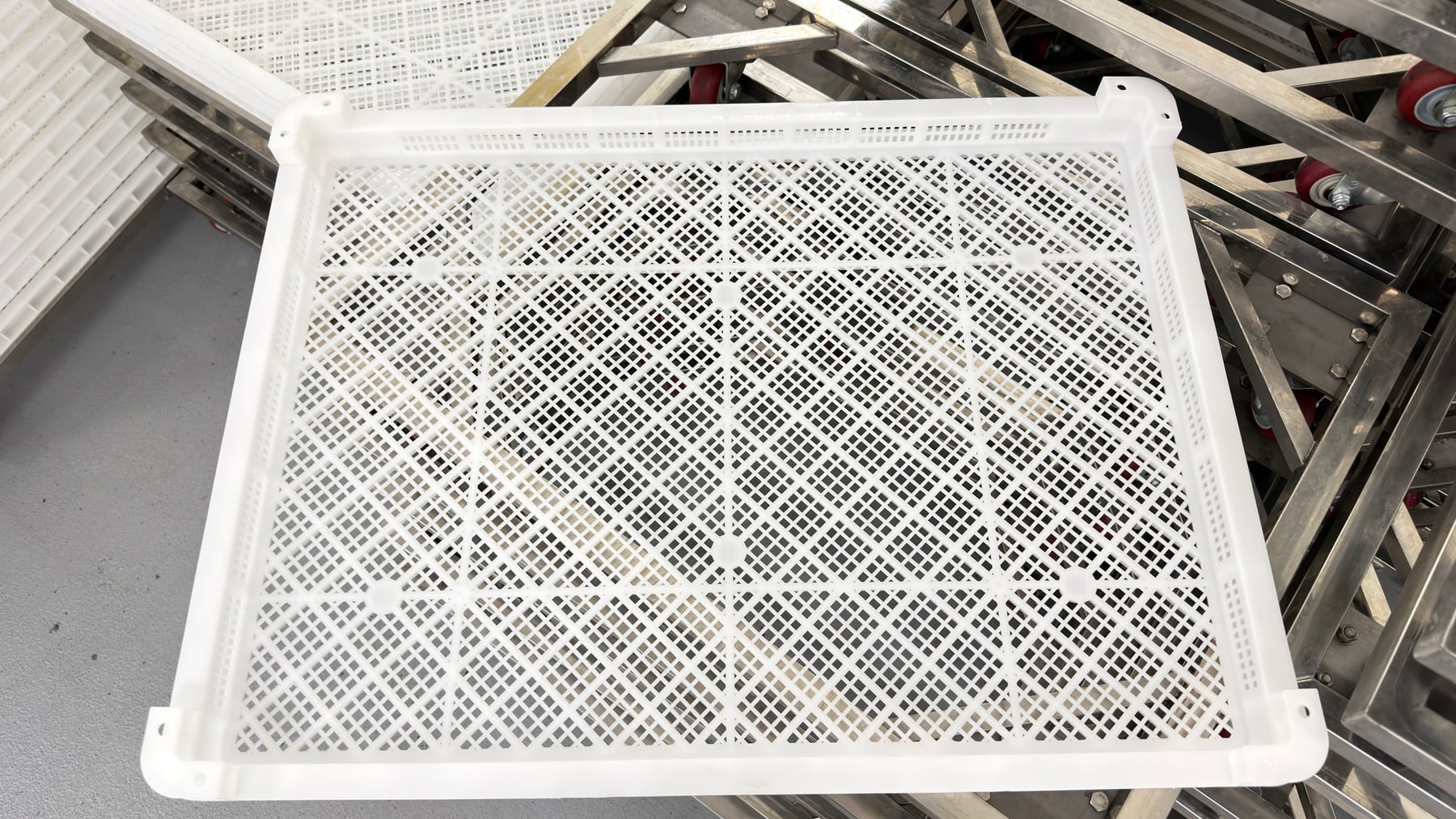
Sugar sanding and oil coating are options to discuss. Include any conditioning, drying trays and downstream handling your recipe needs in the quote.
Start with these published model references. Our team confirms the exact equipment, utilities and layout for your build.
Nominal output varies with formulation, molds and operating conditions. Heating, cooling and auxiliary equipment change the connected load.
Plan my EVO600 linePayment by ACH or wire. Shipping quoted separately.
Nominal mass capacity gives you a consistent starting point. Actual output depends on formulation, piece weight, molds and operating conditions.
Published model references. Final utilities and equipment scope are confirmed in your quote.
Scroll sideways to compare all four models
| Production line | EVO80 | EVO150 | EVO300 | EVO600 |
|---|---|---|---|---|
| Nominal capacity | 50–80 kg/h | 150 kg/h | 300 kg/h | 600 kg/h |
| Reference piece weight | 1–10 g | 1–10 g | 1–10 g | 1–10 g |
| Electrical power | Approx. 80 kW | Approx. 120 kW | 40–120 kW, heating-dependent reference | Approx. 200 kW |
| Compressed air pressure | 0.4 MPa | 0.4–0.6 MPa | 0.4–0.6 MPa | 0.6–0.8 MPa |
| Layout & utilities | Request EVO80 layout | Request EVO150 layout | Request EVO300 layout | Request EVO600 layout |
Electrical values describe published configurations, not a like-for-like efficiency comparison. Heating, cooling and auxiliary equipment change the connected load. A quoted layout establishes the installation space.
All-silicone, metal-reinforced silicone or metal. Find your shape and discuss the construction.
Pair the depositor with molds for your process. Tell us what you make and how you want to run it.